
The solo practitioner hires their first remote paralegal.
Office space is limited. The paralegal works from home, or from the Philippines at $22 per hour.
Within two weeks, the problem becomes clear: coordination overhead consumes more time than the paralegal saves.
The coordination surprise
Solo practitioners hire remote help to reclaim time.
The expectation: delegate administrative tasks, focus on billable work, increase capacity.
The reality: constant check-ins, unclear task handoffs, timezone confusion, and a nagging question: "What is my paralegal working on right now?"
One practitioner described the experience:
"I run a solo law firm, and recently hired my first employee. My office is the size of a shoe box, so by design, this is deliberately a remote position. I pay him $22 per hour and offer 40 hours per week. But this is my first time doing this, so I am learning as I go."
The post received 64 comments. Most offered tactical advice: use Slack, try Asana, schedule daily check-ins.
None addressed the root problem: remote coordination overhead was never measured before the hire. The same gap runs through the wider set of Reddit threads from partners hiring remote paralegals.
The solo practitioner expected a net time gain. Instead, they traded client work for management work.
Why does remote coordination create overhead?
In-office work benefits from ambient coordination.
A paralegal sitting three metres away sees when the lawyer is on a call, in a meeting, or available for questions. Task handoffs happen organically: "Can you draft this letter?" followed by immediate clarification if needed.
Remote work eliminates ambient signals.
The paralegal does not know:
- Is the lawyer available now, or on a client call?
- Is this task urgent, or can it wait until tomorrow?
- Should I ask for clarification, or make my best guess?
The lawyer does not know:
- Is the paralegal working on the task I delegated this morning?
- Is the task complete, or stalled on something?
- Should I check in, or is that micromanaging?
This uncertainty creates coordination overhead:
- Scheduled check-in calls (15 to 30 minutes daily)
- Status update emails ("Just checking in on...")
- Redundant task confirmation messages
- Delayed work whilst waiting for clarification
For a solo practitioner, this overhead is invisible until it compounds.
The timezone complication
Many solo practitioners hire remote paralegals from the Philippines.
The economic logic is sound: skilled paralegals at $22 per hour versus $50 to $70 per hour domestically.
The timezone logic is not: the Philippines is 7 to 8 hours ahead of the UK, 12 to 13 hours ahead of the US East Coast.
A UK-based solicitor finishes a client call at 4:00 PM. They want to delegate follow-up tasks to their paralegal.
The paralegal finished their workday seven hours ago. It is already 11:00 PM in Manila. The tasks sit until tomorrow morning (8:00 AM Manila time, midnight UK time).
By the time the paralegal starts work the next morning, the solicitor is asleep. Any questions or clarifications wait until the UK workday begins, roughly eight hours later.
A task that could complete in 2 hours (if handled synchronously) stretches across 24 to 36 hours due to asynchronous handoff delays.
This is not the paralegal's fault. This is a structural coordination failure.
The micromanagement trap
Solo practitioners hiring their first employee face an unfamiliar tension: delegation without visibility feels like loss of control.
The lawyer cannot see what the paralegal is working on. This creates anxiety:
- Is the task being done correctly?
- Is the paralegal stuck on something?
- Should I check in, or trust the process?
The instinctive response: check in frequently.
Daily Slack messages: "How's the Smith matter draft coming along?"
Impromptu Zoom calls: "Just wanted to see if you had any questions."
Detailed status update requests: "Can you send me a summary of what you worked on today?"
This is micromanagement. It also defeats the purpose of hiring help.
If the lawyer spends 60 to 90 minutes daily managing the paralegal, they have not reclaimed time. They have traded billable work for coordination work.
The task handoff failure mode
Remote delegation often happens via email or Slack.
The lawyer types:
"Can you draft a letter to the client summarising the settlement offer? We discussed £150k as the opening position. Include the three conditions we outlined: immediate payment, no admission of liability, and confidentiality. Let me know when it's ready for review."
The paralegal reads this two hours later (or eight hours later, if timezone-delayed).
They have questions:
- Which client? (The lawyer has 15 active matters.)
- Which settlement offer? (There were two discussed this week.)
- What tone should the letter take? (Formal legal language, or client-friendly plain English?)
The paralegal sends a clarification email. The lawyer responds three hours later. The paralegal starts drafting. The lawyer reviews it the next day and realises the tone is wrong.
Total elapsed time: two days. Actual work time: 45 minutes.
This is not inefficiency. This is a coordination structure problem.
How does voice delegation solve the asynchronous handoff?
Voice-based delegation eliminates typed coordination overhead.
The lawyer finishes a client call and immediately records:
"Task for Sarah: Draft a letter to James Whitfield summarising the settlement offer. Opening position £150k, three conditions: immediate payment, no admission of liability, confidentiality clause. Tone should be formal but client-accessible. Attach the call notes from today's discussion. I need this by Thursday for client review."
The system:
- Transcribes the voice instruction
- Routes the task to Sarah's queue
- Attaches relevant context (call notes, matter reference)
- Sets a deadline reminder
- Notifies Sarah when the task is assigned
Sarah sees:
- Full context (client name, matter reference, deadline)
- Specific instructions (tone, conditions, attachments)
- Voice recording (if clarification needed, she can replay the exact instruction)
Total time to delegate: 30 seconds (speaking time). That gap between speaking and typing is why a voice note beats a typed brief for almost every handoff.
No typing. No waiting for the lawyer to "find time" to write a detailed email. No ambiguity.
The dashboard visibility solution
The micromanagement trap exists because lawyers lack non-intrusive visibility.
They want to know: "What is my paralegal working on?" without interrupting them with a Slack message.
A delegation dashboard provides this:
- Task assigned: "Draft settlement letter for Whitfield matter"
- Status: In progress
- Estimated completion: Thursday 3:00 PM
- Last update: 2 hours ago
The lawyer glances at the dashboard. Sarah is working on the task. No check-in needed.
If the status shows "Blocked" or "Awaiting clarification," the lawyer proactively reaches out. Otherwise, they trust the process.
This eliminates:
- Daily status update requests
- Unnecessary check-in calls
- Paralegal interruptions to report progress
The paralegal works autonomously. The lawyer maintains confidence without micromanaging.
Async status updates across timezones
For timezone-separated teams, asynchronous status updates matter more than synchronous communication.
A Philippines-based paralegal finishes a task at 5:00 PM Manila time (10:00 AM UK time).
Instead of waiting for the lawyer to come online, the system sends an automatic notification:
"Task complete: Settlement letter draft ready for review. Attached to Whitfield matter folder."
The UK-based lawyer sees this notification mid-afternoon. They review the draft, provide feedback via voice note:
"This is great, but can you soften the liability language in paragraph 3? Make it sound less defensive. Otherwise, ready to send."
The paralegal receives this feedback first thing the next morning (Manila time) and makes the revision.
The entire workflow happens asynchronously. No real-time calls required. No waiting for overlapping work hours.
The "shoebox office" problem
Many solo practitioners work from small offices. One desk. No room for a second person.
This forces remote work by default.
Yet most practice management software assumes co-located teams:
- Task boards visible on shared screens
- Physical file handoffs
- Hallway conversations for quick clarifications
Solo practitioners adopting remote paralegals need infrastructure that assumes distributed work:
- Voice-based task assignment (no need for face-to-face delegation)
- Asynchronous status visibility (no need for scheduled check-ins)
- Notification-based completion alerts (no need to ask "Is it done?")
Without this infrastructure, remote coordination consumes more time than in-office coordination would have.
The paralegal hire becomes net-negative on time reclamation.
The "first hire" coordination penalty
Solo practitioners hiring their first employee face a unique challenge: they have no delegation muscle memory.
BigLaw partners delegate constantly. They know how to scope tasks, set expectations, and provide sufficient context. Their associates know how to ask clarifying questions and deliver work in the expected format.
Solo practitioners lack this. They are learning to delegate whilst simultaneously learning to manage remote work. The reasons delegation fails in small firms all apply, and the distance makes each one worse.
This doubles the coordination friction.
The solution is not "get better at delegating." The solution is infrastructure that compensates for inexperience:
- Voice delegation captures context automatically (no need to remember what to include)
- Task templates provide structure (no need to reinvent delegation formats)
- Dashboard visibility reduces anxiety (no need to check in constantly)
The paralegal becomes productive immediately, rather than waiting for the lawyer to master delegation.
The buyer perspective on remote coordination
When I evaluate law firms for acquisition, remote team coordination reveals operational maturity.
Firms with systematised remote work:
- Scale without geographic constraints
- Access global talent at competitive rates
- Maintain service quality across distributed teams
Firms with ad hoc remote coordination:
- Experience high remote worker turnover (due to unclear expectations)
- Suffer service inconsistency (delegation failures create client-facing errors)
- Carry hidden overhead (partners spending hours daily on coordination)
The valuation difference is measurable. Firms with repeatable remote coordination systems can scale without proportional headcount growth. Buyers pay premium multiples for scalability.
Ad hoc coordination limits scalability. Buyers discount for structural inefficiency.
What does this mean for a solo practitioner hiring remotely?
If you are a solo practitioner hiring your first remote paralegal, coordination infrastructure is not optional.
Email and Slack are communication tools. They are not delegation systems.
Effective remote coordination requires:
- Voice-based task assignment (faster than typing, captures full context)
- Asynchronous status visibility (eliminates check-in overhead)
- Automatic deadline reminders (reduces mental tracking burden)
- Notification-based completion alerts (no need to ask "Is it done?")
Without this infrastructure, remote delegation creates more work than it saves.
With this infrastructure, a remote paralegal reclaims 10 to 15 hours weekly. Permanently.
The 70% coordination reduction
In early deployments, firms implementing voice-based delegation have reported significant reductions in coordination overhead.
Before:
- 15 to 20 minutes daily on status update calls
- 10 to 15 Slack messages confirming task status
- 30 to 45 minutes weekly on "alignment meetings"
After:
- 5 minutes daily checking the dashboard
- 2 to 3 Slack messages (only for genuine clarifications)
- No alignment meetings (status is always visible)
For a solo practitioner, this reclaims upwards of 80 minutes weekly.
For a small firm with three remote paralegals, the savings multiply accordingly, potentially 4 or more hours weekly per lawyer.
The reclaimed time converts to billable work, business development, or strategic planning.
The decision point
Most solo practitioners treat remote coordination overhead as an unavoidable cost of distributed work.
This is false.
Coordination overhead is a choice. Specifically, a choice about infrastructure:
- Email-based delegation with manual check-ins
- Or voice-based delegation with asynchronous visibility
Firms choosing email-based coordination pay the coordination tax indefinitely. Hiring remote help creates new overhead.
Firms choosing voice-based infrastructure reclaim time immediately. Remote help becomes genuinely scalable.
The question is not whether remote coordination overhead exists. The question is whether you architected for it.
And if you did not, whether you accept the hidden cost.
Frequently asked questions
Why does hiring a remote paralegal sometimes cost a solo practitioner time?
Because remote work removes the ambient signals an office provides. Neither side knows whether the other is available, whether a task is urgent, or whether it has stalled, so both compensate with check-in calls, status emails and confirmation messages. That overhead is invisible until it compounds, and a lawyer spending 60 to 90 minutes a day managing a paralegal has traded billable work for coordination work.
How does the timezone gap affect a UK lawyer with a paralegal in the Philippines?
The Philippines is 7 to 8 hours ahead of the UK, so a task delegated at 4:00 PM UK time reaches a paralegal who finished work hours earlier. Questions then wait for the UK morning, and a job that would take 2 hours synchronously can stretch across 24 to 36 hours. That is a structural coordination failure, not the paralegal's fault.
How does voice delegation reduce remote coordination overhead?
The lawyer records the instruction straight after the client call, in about 30 seconds, with client name, conditions, tone, attachments and deadline included. The system transcribes it, routes it to the paralegal's queue, attaches the matter context and sets a reminder. The paralegal can replay the exact recording, so clarification emails and typed briefs mostly disappear.
What stops a solo practitioner from micromanaging a remote paralegal?
Non-intrusive visibility. A delegation dashboard showing the task, its status, estimated completion and last update lets the lawyer glance rather than interrupt. If a task shows as blocked or awaiting clarification, they step in. Otherwise they trust the process, and the daily status requests, impromptu calls and progress interruptions fall away.
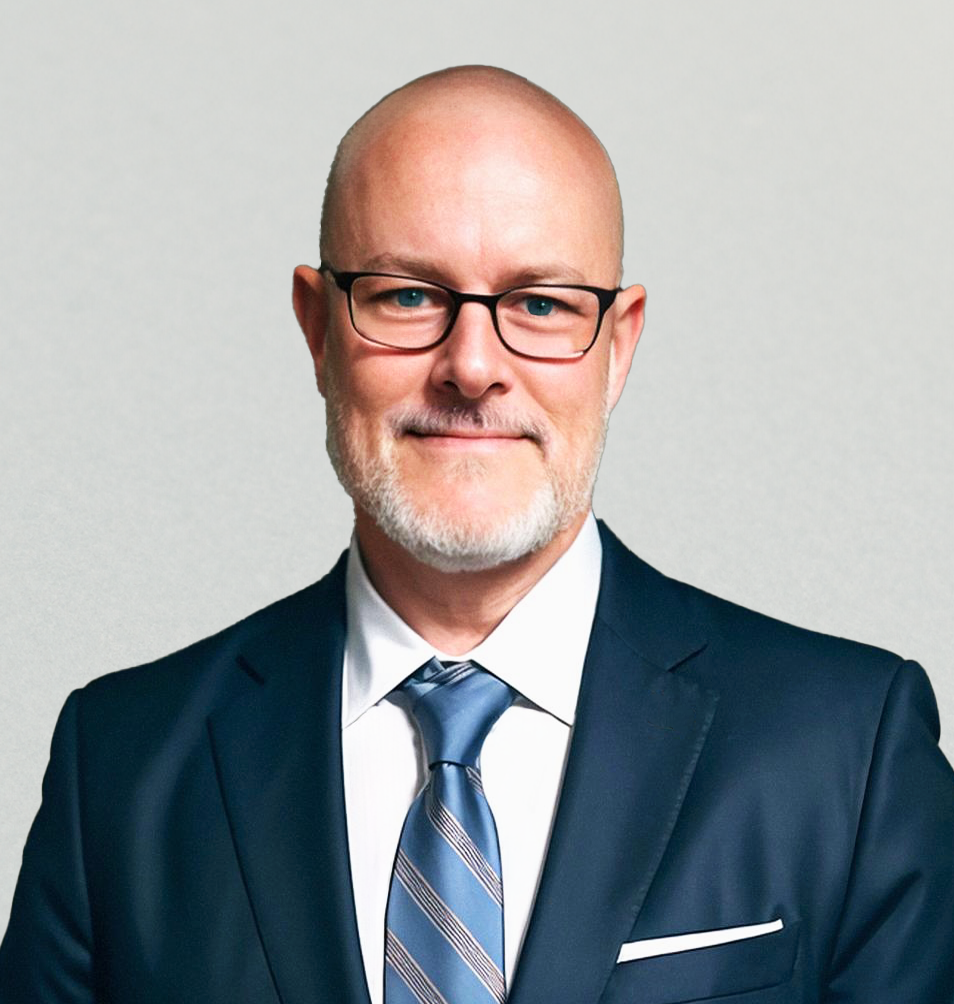
Ex-Microsoft and JPMorgan executive, engineer, and Harvard MBA with 20 years in digital transformation. Founder of ChiefofStaff.pro.
Buy back your time
ChiefofStaff.pro is the execution layer above the software your firm already uses. It turns a managing partner's instruction into controlled execution, with a record of what happened. No new software for your team to learn. Join the waitlist for early access.
Join the waitlist →